What Is Vaginismus?
Painful sex isn't something you have to live with. If sex, tampon use, or a pelvic exam has ever felt impossible, or left you bracing for pain, you're not alone, and you're not broken. Many women quietly live with this for months or years, often assuming it's just something they have to put up with. It isn't. What you're experiencing may be vaginismus, and it's a well recognised, treatable condition.
This article is general information only and isn't a substitute for individual medical or physiotherapy advice. If you're experiencing pain during intercourse or penetration, please speak with your GP or a qualified pelvic health physiotherapist about your specific situation.
- Vaginismus is an involuntary tightening of the pelvic floor muscles that makes penetration difficult or painful.
- It's more common than most people realise, and it's not "in your head", it's a real physical response, often with emotional contributors too.
- Pelvic floor physiotherapy is one of the primary, evidence based treatments, and many women see improvement with the right assessment and support.
- Treatment is always paced to your comfort, with your consent guiding every step.
Vaginismus is a condition where the pelvic floor muscles surrounding the vagina involuntarily tighten or spasm, making vaginal penetration difficult, painful, or sometimes impossible. This isn't something a person consciously controls. It can happen during sexual intercourse, tampon insertion, gynaecological examinations, or any other form of vaginal penetration.
Many women describe it as hitting a "wall", a blockage that seems to appear from nowhere. Others feel burning, stinging, or sharp pain even with gentle attempts at penetration.
You're not alone, and you're not broken.– Aurum
You're Not the Only One
Vaginismus is widely underdiagnosed, but it affects women of all ages and backgrounds. Embarrassment, uncertainty, or the mistaken belief that "pain during sex is just normal" keep many women from seeking help, sometimes for years.
Pain during intercourse is common. It is not something you should have to accept.
Research estimates vaginismus affects between 1% and 7% of women in the general population, according to a study published on PubMed Central.
The Different Types of Vaginismus
Primary Vaginismus
Pain or difficulty with penetration from the very first attempt, including intercourse, tampon use, or a pelvic exam.
Secondary Vaginismus
Develops after a period of comfortable penetration, often following childbirth, surgery, injury or menopause.
Situational Vaginismus
Symptoms appear only in certain contexts, such as during intercourse but not during a medical exam.
Global Vaginismus
Muscle tightening occurs with all forms of vaginal penetration, without exception.
What Causes Vaginismus?
Vaginismus usually stems from a mix of physical, emotional and psychological factors, and every woman's experience is different.
Muscle Overactivity
Pelvic floor muscles become tight and protective, guarding involuntarily against penetration.
Fear of Pain
A previous painful experience creates a cycle where the body tightens defensively before anything happens.
Injury or Trauma
Childbirth, pelvic surgery, or painful medical experiences can leave the pelvic floor tense and sensitised.
Medical Conditions
Recurrent UTIs, vulvodynia, endometriosis or chronic pelvic pain can all contribute to guarding.
Hormonal Changes
Menopause can affect vaginal tissue health, sometimes triggering protective muscle tightening.
Stress and Anxiety
Emotional stress can raise muscle tension throughout the body, including the pelvic floor.
Common Symptoms
- Pain during intercourse or attempted penetration
- Difficulty with tampon use or pelvic examinations
- Burning, stinging or tightness around the vaginal opening
- Fear or anxiety associated with penetration
- Pelvic pain before, during or after intercourse
- Low back pain linked to pelvic floor tension
Some women experience mild discomfort. Others can't tolerate any penetration at all. Both ends of that spectrum, and everywhere in between, are valid reasons to seek support.
Does This Sound Familiar?
Tick anything that resonates. This isn't a diagnosis, just a gentle way to reflect on what you've been experiencing.
Learn more about pelvic floor physiotherapy in Casula and how treatment may help you feel more comfortable and in control.
Get In TouchHow Pelvic Floor Physiotherapy in Casula Can Help
At Aurum Physiotherapy in Casula, we start by identifying what's contributing to your symptoms, then build an individualised treatment plan around it.
- Reduce pelvic floor muscle tension
- Improve muscle relaxation and coordination
- Decrease pain associated with penetration
- Rebuild confidence and body awareness
- Address contributing movement or postural factors
- Work gradually back towards comfortable sexual activity, at your own pace
Every step of treatment is guided by your consent, your comfort, and your goals, never the other way around.
What to Expect at Your First Appointment
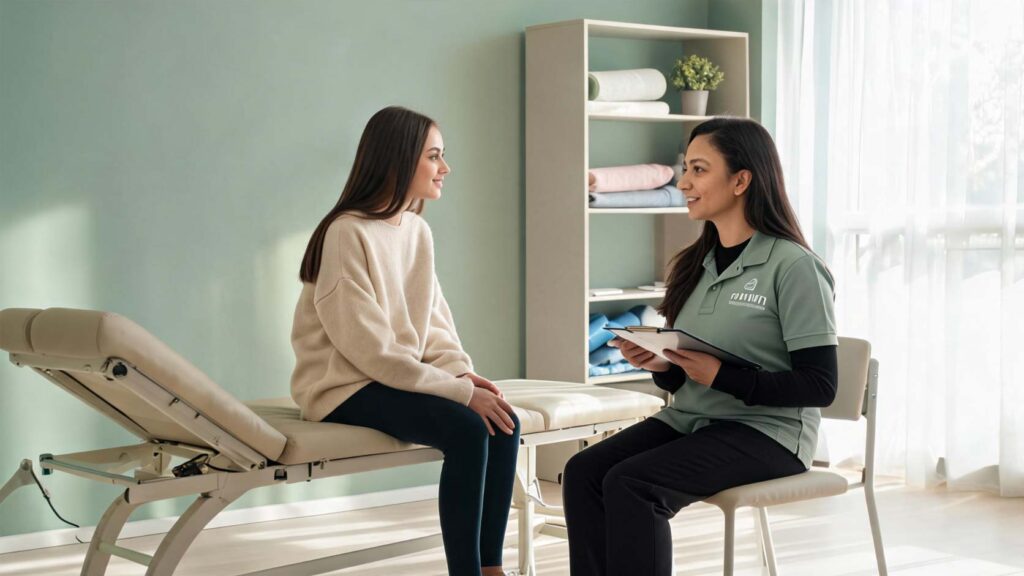
Your first session starts with a detailed conversation about your symptoms, medical history and goals, no assumptions, no judgement. From there, treatment may include patient education on how the pelvic floor works, an optional pelvic floor assessment (only with your consent), relaxation and breathing techniques, stretching and mobility work through the pelvis, hips and lower back, and a graduated, structured approach to rebuilding comfort with penetration over time.
Is Pelvic Floor Physiotherapy Safe?
Yes. It's a safe, evidence based approach when delivered by a physiotherapist trained in women's health and pelvic floor rehabilitation. Everything is tailored to your comfort level, you stay in control throughout, and nothing happens without your informed consent.
For general health information, Healthdirect Australia is a useful independent resource. To find an accredited physiotherapist near you, the Australian Physiotherapy Association can help.
Servicing Casula and surrounding suburbs including Liverpool, Prestons, Lurnea, Glenfield, Hoxton Park, Green Valley, Miller, Warwick Farm, Moorebank and Chipping Norton.
Frequently Asked Questions
Is vaginismus psychological or physical?
Usually both. Pelvic floor muscle tightness is the physical component, while fear, anxiety or past experiences can also play a role. Effective treatment tends to address both sides.
Can vaginismus go away on its own?
Some cases ease over time, but persistent symptoms usually respond better to professional assessment and targeted treatment.
Can pelvic floor physiotherapy help?
Yes, it's considered one of the primary approaches for vaginismus, and can help improve relaxation, reduce pain and support function.
How many sessions will I need?
It depends on symptom severity, contributing factors and your individual goals. Some women notice improvement within a few sessions, others benefit from a longer program.
You Don't Have to Live With This
Vaginismus can affect your confidence, your relationships, and your quality of life, but painful intercourse is not something you simply have to accept.
If any of this sounds familiar, reach out to Aurum today. Call 0402 832 329 or send us a message through our contact page, we're happy to talk it through first.
Ready to feel more comfortable and confident? Reach out to Aurum Physiotherapy in Casula today.
Contact UsSources: Pithavadian R, Dune T, Chalmers J, Ramanathan V, "The interrelationship between women's help-seeking experiences for vaginismus and their sense of self," Health Psychology and Behavioral Medicine, 2024 (prevalence estimate); Healthdirect Australia, Vaginismus; Australian Physiotherapy Association, Find a Physio.