What Is Pregnancy Massage?
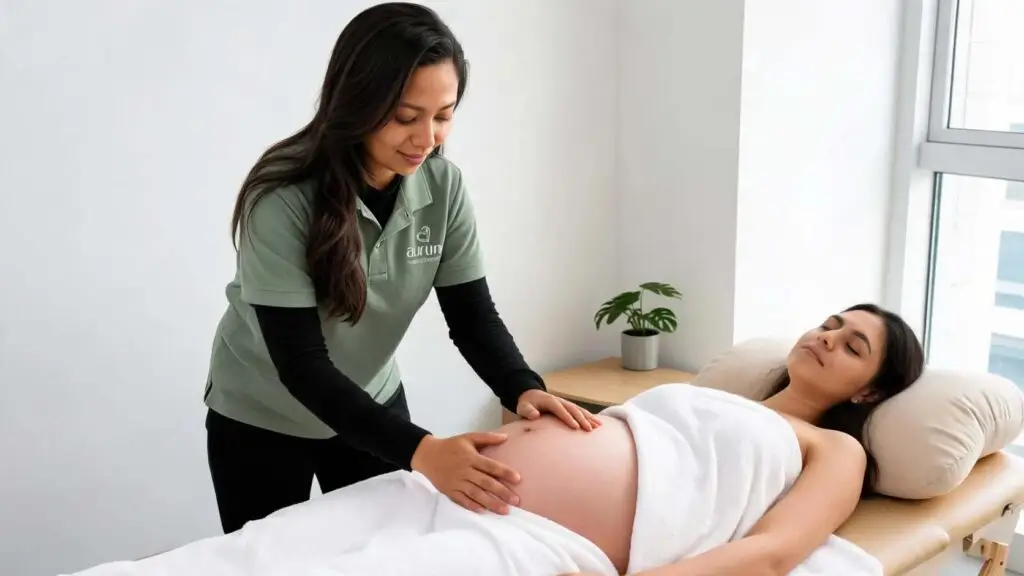
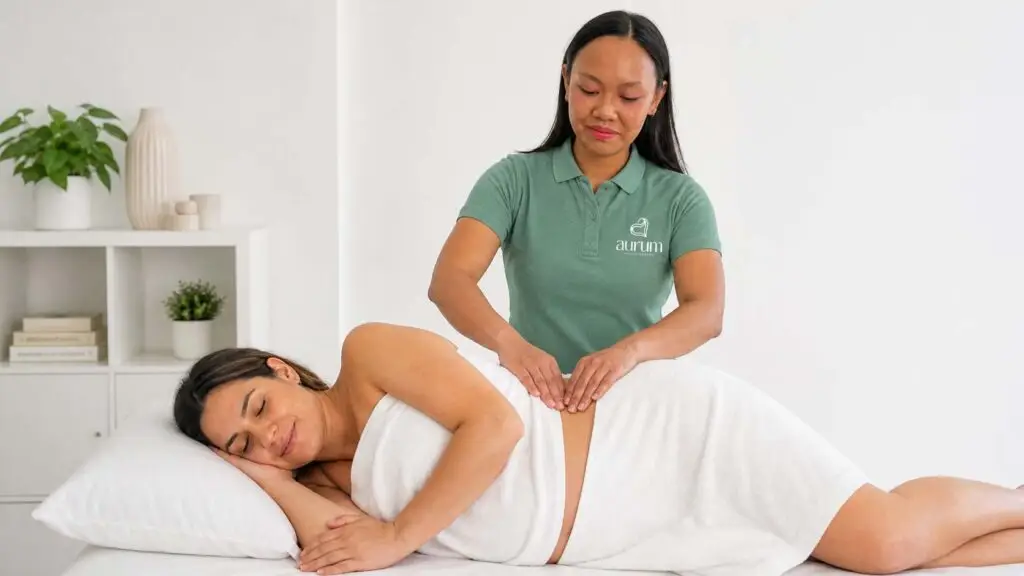
Pregnancy massage is a modified form of remedial massage adjusted for positioning, pressure and technique. Research from the Touch Research Institute and a 2021 systematic review of randomised controlled trials links it to lower cortisol, less back and leg pain, better sleep and reduced anxiety. It's considered safe when performed by a therapist trained in prenatal care, though a few pregnancy complications need medical clearance first (details below).
By the third trimester, most of the "pregnancy is beautiful" talk starts to feel a bit rich. Your back aches, your ankles have opinions of their own, and you're tired in a way that sleep doesn't fix. None of that means anything is wrong. It just means your body is doing an enormous amount of work.
Pregnancy massage is one of the more practical ways to make that work easier to carry. Here's what the research actually says it does, and when it's worth checking with your doctor first.
1. It Targets the Muscles Carrying the Extra Load
As your bump grows, your centre of gravity shifts forward and your posture compensates for it. That extra strain tends to show up in predictable places.
- Headaches from neck and shoulder tension
- Lower back and shoulder tightness
- Hip, pelvic and sciatic pain. The Royal Women's Hospital reports that pelvic girdle pain affects around 50% of women during pregnancy
- Leg cramps, especially at night
A 2021 systematic review of randomised controlled trials published in the Journal of Clinical Medicine found that regular pregnancy massage was consistently linked to reduced back and leg pain, alongside lower reported stress and anxiety, across the trials it examined.
2. It Helps With Circulation, Swelling and Immune Function
Swelling in the hands and feet is common from the second trimester onward, largely down to slower circulation and fluid retention. The gentle techniques used in prenatal-adapted remedial massage stimulate blood and lymphatic flow, which can ease some of that heaviness. The same systematic review noted a measurable rise in immunoglobulin A, an antibody linked to immune function, in women who received regular massage sessions through pregnancy.
3. It Measurably Shifts Stress Hormones
This is the part with the most solid research behind it. Studies from the Touch Research Institute at the University of Miami, led by Dr Tiffany Field, have repeatedly found that massage therapy during pregnancy lowers cortisol (the primary stress hormone) while raising serotonin and dopamine.
Average cortisol change following massage therapy (research summary, not a live measurement)
Based on an average 31% decrease in cortisol levels across pooled massage therapy studies (International Journal of Neuroscience, Field et al.). Individual results vary and this isn't a guarantee of a specific outcome.
In practical terms, this tends to show up as less anxiety, steadier sleep and a bit more emotional evenness, particularly useful given how much pregnancy hormones can move mood around.
4. It Helps With the Fatigue That Coffee Can't Touch
Extra weight, reflux, insomnia. Nearly every expecting mum is dealing with some combination of these. Because massage improves circulation and helps clear waste products that contribute to fatigue, many people report feeling noticeably more refreshed for a few days afterward.
5. It May Help With Labour and Recovery, Though the Evidence Is Mixed
This is worth being upfront about rather than overselling. One well-known Touch Research Institute study found that women who received massage during labour experienced significantly less pain, with labours averaging around three hours shorter and less need for pain medication. Other, later trials looking specifically at labour duration haven't consistently replicated the time reduction, even where they still found less pain and greater satisfaction with the birth experience.
The fair summary: massage during pregnancy and labour is well supported for reducing pain and anxiety. A shorter labour is a possible bonus some studies have found, not a guaranteed outcome.
Massage during pregnancy and labour is well supported for reducing pain and anxiety. A shorter labour is a possible bonus, not a guaranteed outcome.
Learn more about pregnancy massage in Casula and how it may help ease back pain, swelling and stress through each trimester.
Make BookingWhat to Expect, Trimester by Trimester
| Trimester | Common discomforts | Typical approach |
|---|---|---|
| First (weeks 1-12) | Nausea, fatigue, tender breasts | Lighter pressure, shorter sessions, focus on relaxation over deep tissue work |
| Second (weeks 13-27) | Back pain, round ligament pain, early swelling | Side-lying positioning begins, more focus on lower back and hips |
| Third (weeks 28-40) | Sciatica, pelvic girdle pain, swelling, poor sleep | More frequent sessions, side-lying with support cushions, pressure points linked to labour avoided |
Pregnancy Massage Benefits at a Glance
| What you're feeling | What massage targets |
|---|---|
| Lower back or hip pain | Muscular tension from postural changes and pelvic girdle strain |
| Swollen hands or feet | Circulation and lymphatic drainage |
| Anxiety or low mood | Cortisol reduction, serotonin and dopamine increase |
| Constant tiredness | Improved circulation and waste clearance |
| Trouble sleeping | Lower stress hormones, improved relaxation response |
What Actually Happens in a Session
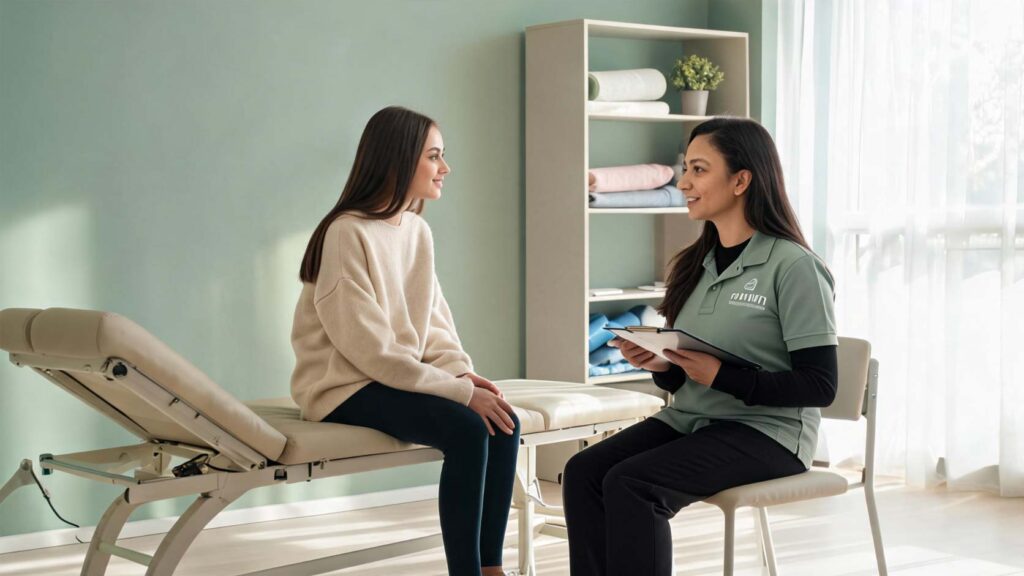
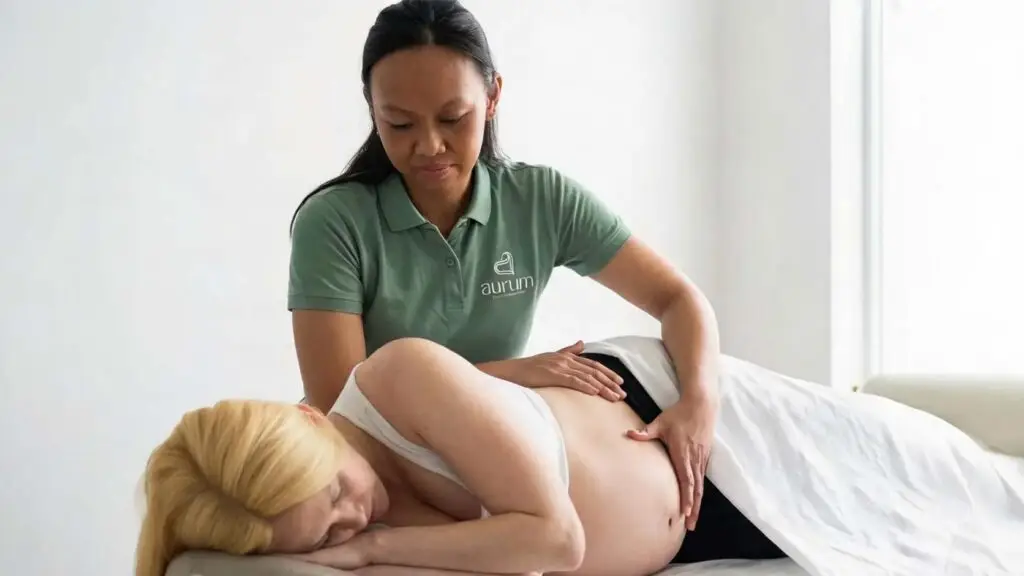
Your first appointment starts with a proper conversation: what trimester you're in, what's bothering you, and your relevant medical history. From there, you're positioned safely, usually side-lying with support cushions rather than flat on your back, and pressure is kept gentle to moderate throughout. Deep tissue work and pressure points linked to labour induction are avoided entirely.
My first remedial massage with Aurum Physiotherapy and I had an amazing session with Amanda.– Chanelopea, Google review
Is It Safe? When to Check With Your Doctor First
Pregnancy massage is considered safe when it's performed by a therapist trained specifically in prenatal care. That said, it's worth getting the all-clear from your GP or midwife first if any of the following apply:
- Blood clotting disorders (DVT, phlebitis)
- Chronic or gestational hypertension, or pre-eclampsia
- History of miscarriage or vaginal bleeding
- Hyperemesis gravidarum (severe nausea)
- Kidney conditions, or pregnancy over the age of 45
Common Questions
When Can I Start Pregnancy Massage?
Any point in pregnancy. Technique and positioning are adjusted for each trimester, with first-trimester sessions typically lighter and more relaxation-focused.
How Often Should I Go?
It varies. Monthly works well for general wellbeing, while weekly or fortnightly sessions are common in the third trimester when discomfort tends to peak.
Can It Bring On Labour?
No. There's no current evidence that properly performed pregnancy massage induces labour, and trained therapists actively avoid techniques that could be contraindicated.
Ready to Book?
You're doing the hard work of growing a person. Giving your body some support along the way isn't indulgent, it's just sensible. Aurum Physiotherapy offers pregnancy massage in Casula with a therapist trained specifically in prenatal care, with same-day appointments often available.
Book your pregnancy massage online, or call the clinic on 0402 832 329 to find a time that suits.
Ready to book? Book your pregnancy massage in Casula session today.
Make BookingSources: The Royal Women's Hospital; Field et al., "Pregnancy and Labor Massage," Touch Research Institute, University of Miami; Field et al., International Journal of Neuroscience; "Effects, Side Effects and Contraindications of Relaxation Massage during Pregnancy," Journal of Clinical Medicine (2021).