Understanding shoulder pain and injury through an exercise physiology perspective
Shoulder injuries and pain are one of the most commonly occurring injuries, affecting millions of individuals globally. Around 6 million Australians seek medical attention annually due to shoulder issues, which most commonly affects adults aged 40-80, particularly those with very physically demanding jobs.
Read on to learn how hydrotherapy physiotherapy supports movement in warm water.
Exercise Physiology for Shoulder Pain and Injury
Shoulder pain and injury are among the most common musculoskeletal conditions, affecting millions of people each year. In Australia alone, around 6 million people seek medical attention annually for shoulder-related issues. These problems are most common in adults aged 40–80 and in individuals with physically demanding jobs.
As the most mobile joint in the body, the shoulder is highly susceptible to strain, instability, and overuse injuries. Common conditions include rotator cuff tears, dislocations, ligament injuries, impingement, tendonitis, bursitis, and frozen shoulder.
These injuries can develop from falls, heavy lifting, repetitive overhead movement, or sudden impact. Left unmanaged, they can limit movement, reduce strength, and affect daily function.
How Exercise Physiology Helps Shoulder Pain
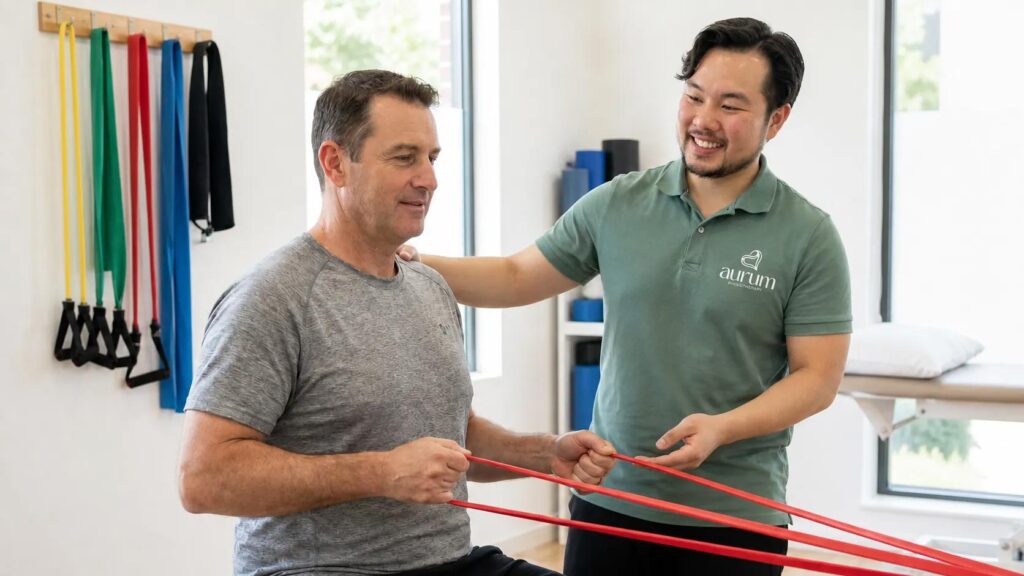
Exercise physiology plays a key role in shoulder injury rehabilitation. Rather than avoiding movement, a structured exercise program helps restore strength, improve mobility, and reduce pain over time.
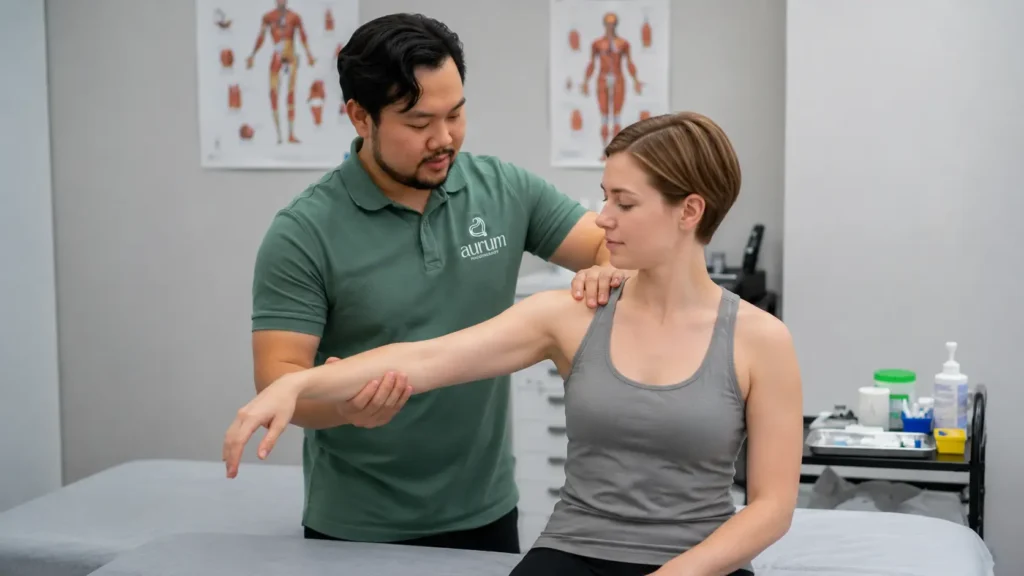
Your exercise physiologist will assess your condition and develop a tailored program designed to:
- Reduce pain and inflammation
- Improve shoulder mobility and range of motion
- Rebuild strength and stability
- Restore functional movement for daily activities
- Progress safely back to work, sport, or training
Book an appointment to experience how hydrotherapy supports easier, pain-free movement.
Exercise Physiology Approach to Shoulder Rehabilitation
Load Management
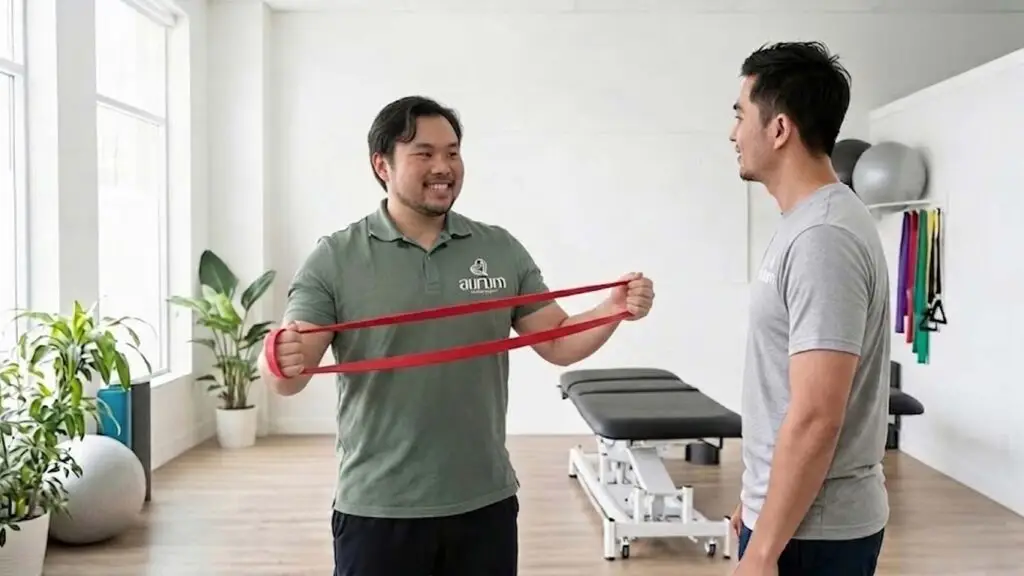
Exercises begin with low or minimal resistance to establish safe movement patterns. The focus is on gradually reintroducing load without aggravating symptoms, while improving joint stability and control.
Movement Quality
Correct technique is essential. Your exercise physiologist will guide you through proper movement patterns to maximise results and reduce the risk of re-injury or flare-ups.
Goal-Based Progression
Your program is built around clear short-term and long-term goals. Exercises are progressed gradually to improve strength, endurance, and overall shoulder function.
Common Shoulder Exercises Used in Rehabilitation
Your program will vary depending on your injury, but may include:
- Shoulder mobility and stretching exercises
- Strength-based exercises such as shoulder press
- Lat pull-downs and rowing variations
- Tricep extensions and bicep curls
- Stability and control-based movements
Frequently Asked Questions
Do I Have to Exercise in the First Session?
Your first exercise physiology session is an initial consultation focused on understanding your condition, symptoms, and goals.
- Discussion of your injury, lifestyle, and exercise history
- Assessment of strength, movement, and pain levels
- Introduction to suitable exercises where appropriate
Some patients begin light exercises in the first session, while others start in follow-up sessions depending on their condition.
What Types of Exercises Will I Do?
Your exercise program is tailored to your specific shoulder condition, pain levels, and goals. The focus is on restoring movement, improving strength, and gradually increasing load without aggravating symptoms.
- Shoulder mobility and stretching exercises
- Strength exercises such as shoulder press
- Lat pull-downs and rowing variations
- Tricep extensions and bicep curls
- Stability and control-based movements
Some exercises may feel unfamiliar at first, but your exercise physiologist will guide you through each movement and adjust your program as your strength and confidence improve.
Is It Normal to Feel Sore After My First Session?
Yes. It is completely normal to feel sore after your first proper exercise physiology session as your muscles are working harder than what they are used to.
- Muscle soreness is a normal response to new or increased activity
- Small microscopic muscle tears occur during exercise and repair during rest
- This process helps your muscles become stronger and more resilient
It is recommended to rest the day after your session and include light activity such as walking to support recovery.