What Is Dry Needling?
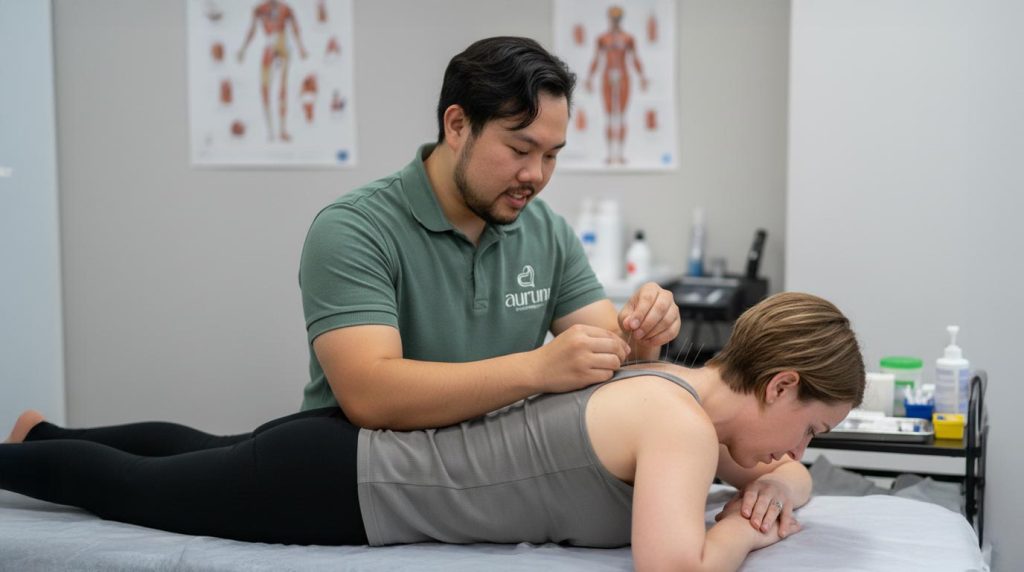
Dry needling is a physiotherapy technique used to treat tight or painful muscles. A very fine, sterile needle is placed into specific points in the muscle, often called trigger points. These are areas where muscle fibres stay tense instead of relaxing.
The goal is simple. Help the muscle relax, reduce pain, and restore normal movement.
Dry needling is not acupuncture. It is based on modern anatomy and pain science and is used as part of a broader physiotherapy treatment plan.
How Dry Needling Works
When a muscle stays tight for too long, it can limit movement and cause pain locally or in other areas of the body. Dry needling helps interrupt this cycle by targeting tight muscle bands directly.
How dry needling can help
- Reducing muscle tension
- Improving blood flow to the affected area
- Decreasing pain signals sent to the brain
- Helping the muscle return to normal length and function
Many people feel a brief twitch or ache during treatment. This is normal and usually settles quickly after the session.
Read the next article to learn how joint mobilisation helps restore movement and reduce stiffness.
Conditions Commonly Treated With Dry Needling
Dry needling is often used for muscle-related pain and movement issues. It may help with:
- Neck and shoulder tension
- Lower back pain
- Headaches linked to muscle tightness
- Sports muscle strains
- Hip and glute pain
- Jaw and facial muscle tension
Your physiotherapist will assess whether dry needling is appropriate for your condition.
What to Expect During Treatment
Before Treatment
Your physiotherapist will:
- Take a detailed history
- Assess movement and muscle tone
- Explain why dry needling may help
- Gain your consent before starting
During Treatment
- Very fine needles are used
- Treatment usually lasts a few minutes per area
- Sensations vary from mild pressure to a brief ache
After Treatment
- Mild soreness can occur for 24 to 48 hours
- Light movement and hydration are encouraged
- Your physio may give stretches or exercises to support recovery
Is Dry Needling Safe
Dry needling is safe when performed by a trained physiotherapist. Single-use sterile needles are always used. Not everyone is suitable, and your physio will screen for any risks before treatment.
Frequently Asked Questions
Does dry needling hurt?
Most people describe it as uncomfortable rather than painful. Any soreness usually fades within a day or two.
How many sessions will I need?
This depends on your condition and how your body responds. Some people notice improvement after one session, others need several.
Can I exercise after dry needling?
Lets connect
If muscle tightness is limiting how you move or feel, dry needling may help. Book an appointment with our physiotherapy team to see if it is right for you.